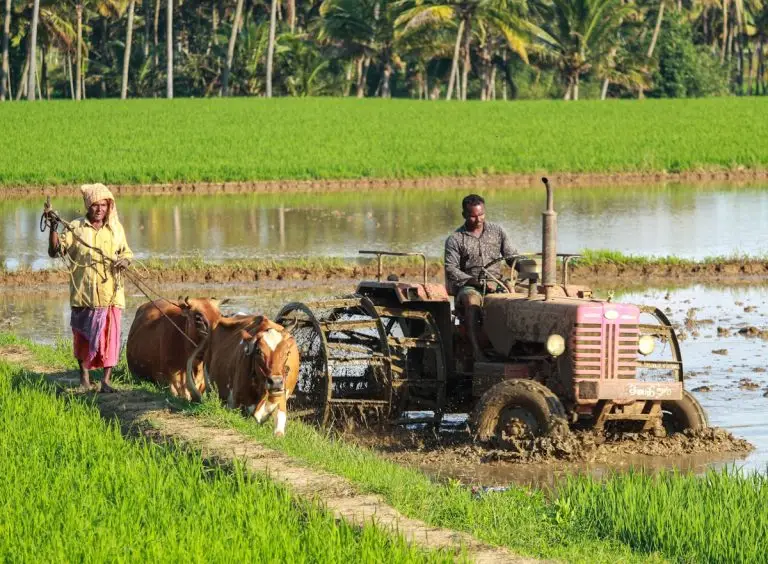
Across East Africa, poultry farming is undergoing a fundamental shift. What was once a backyard activity — a few dozen birds scratching in open runs — is rapidly evolving into a structured, technology-driven industry. The demand for eggs and poultry meat has never been higher. Population growth, urbanisation, and rising protein consumption are creating a market that local production simply cannot satisfy. Yet the constraint is not demand. It is infrastructure.
The Real Barrier to Poultry Growth
The core insight driving commercial poultry investment in Kenya and the wider East African region is straightforward: poultry success is constrained by poor infrastructure, disease risk, and non-scalable farm design — not by a lack of market opportunity. Farmers who attempt to scale using traditional open-sided housing face mounting losses from heat stress, biosecurity breaches, and inconsistent flock performance. The result is a ceiling on growth that no amount of ambition alone can break through.
This reality is attracting a new wave of investors — from Commercial Poultry Integrators managing flocks of over 50,000 birds, to Scaling Agripreneurs building operations in the 10,000 to 50,000 bird range, to High-Net-Worth Individuals and Family Offices seeking productive agricultural assets, and Institutional Buyers and Cooperatives looking to professionalise their supply chains. Each segment shares the same requirement: production systems engineered for African conditions.
Not Poultry Houses. Production Systems.
Big Dutchman East Africa delivers exactly this. Backed by over 85 years of global poultry and pig production expertise and more than 12 years of proven operations in Kenya, Big Dutchman provides closed-environment production systems built on German precision engineering. These are not simple structures. They are fully integrated environments — climate-controlled via ViperTouch climate computers and AirMaster ventilation fans, automated with FLUXX chain feeding systems and Champion broiler feeders, and designed to deliver flock performance metrics that open housing cannot match.
Automation reduces labour dependency and eliminates the inconsistencies of manual feeding, watering, and climate management. The result is measurable: survival rates exceeding 97%, consistent egg production cycles, and annual profit potential of KES 12 million and above per production unit.
A Modular Growth Approach
Big Dutchman’s model is built for scalability. Rather than requiring a full-farm capital commitment from day one, the modular approach allows investors to grow in defined stages:
Stage 1 — Single House Entry: A turnkey production unit starting from approximately $150,000, equipped with ViperTouch controllers, FLUXX feeding, and AirMaster ventilation — designed to prove the model and begin generating returns immediately.
Stage 2 — Dual House Expansion: Adding a second house to increase capacity and diversify production cycles, reducing income gaps between flocks.
Stage 3 — Multi-House Farm: Scaling to three or more houses with shared infrastructure, driving down per-unit costs and increasing operational efficiency.
Stage 4 — Full Integration: A complete production farm with BFN Fusion feed processing, egg grading, and direct market supply — a self-sustaining agricultural business generating $16,000+ per month per house.
This staged pathway means investors control their risk exposure while building toward a fully commercial operation at their own pace.
Smart Farming, Real-Time Control
Every Big Dutchman system comes equipped with BigFarmNet smart farming technology and ViperTouch climate controllers. Operators can monitor house conditions — temperature, humidity, feed consumption, water intake, and bird activity — remotely via smartphone through the BigFarmNet platform. RainMaker evaporative cooling and FlexLED lighting systems respond automatically to environmental conditions and production schedules. This level of visibility transforms farm management from reactive guesswork into data-driven decision-making, whether the investor is on-site or managing from Nairobi, Kampala, or Dar es Salaam.
Proven Across East Africa
Big Dutchman’s track record in the region speaks for itself. Partnerships with Kenya’s largest poultry producers — including Kenchic, Farmer’s Choice, QMP, and Isinya Farm — demonstrate that these systems perform at scale under real East African conditions. Backed by 24/7 after-sales support across the region, every installation is supported from commissioning through to full operational maturity.
The transition from subsistence to scale is not a future aspiration. It is happening now. For investors and agripreneurs ready to build production systems that deliver consistent, bankable returns with full ROI within 18 months, Big Dutchman East Africa is the partner of choice.
The Economics of Transition
For scaling agripreneurs and first-time commercial investors, the financial case for transitioning to automated production systems is decisive. A manual operation with 10,000 birds typically achieves survival rates of 75-85% and feed conversion ratios well above international benchmarks. The same flock size in a Big Dutchman controlled-environment house delivers 97%+ survival, optimised FCR, and consistent output that commands premium market pricing. The difference in annual profitability between these two approaches — across mortality savings, feed efficiency, labour reduction, and market access — frequently exceeds the cost of the production system itself within the first 18 months of operation.
This is not a theoretical exercise. Across Kenya, Uganda, and Tanzania, operators who have upgraded from open-sided housing to Big Dutchman automated systems report that the transition paid for itself faster than projected. The combination of RainMaker evaporative cooling maintaining bird comfort in peak heat, FlexLED lighting optimising production cycles, and FLUXX precision feeding eliminating waste creates a compounding efficiency advantage that manual operations cannot replicate regardless of management quality.
Build Your Farm. Build Your Future.