Water Demand Benchmarks for Commercial Flocks
Water is the single most critical input in poultry production — more immediately essential than feed, more operationally sensitive than temperature control. A bird deprived of water for even a few hours suffers measurable productivity losses. In East Africa’s arid and semi-arid lands (ASAL), where rainfall is unpredictable and infrastructure sparse, engineering a reliable water supply is not optional. It is the foundation upon which every other system depends.
Understanding consumption benchmarks is the starting point for system design:
- Layer hens: 200–300 ml per bird per day under normal conditions
- Broilers: 150–250 ml per bird per day, scaling upward with age and body weight
- Temperature multiplier: When ambient temperatures exceed 30°C, water consumption can double as birds rely on evaporative cooling
- Flock-level demand: A 30,000-bird commercial flock requires 6,000–9,000 litres per day under standard conditions — and up to 18,000 litres during heat events
Storage capacity must cover 3–5 days of peak consumption to buffer against supply interruptions. For a 30,000-bird operation, that means maintaining 27,000–45,000 litres of clean, treated water in reserve at all times. These are not estimates — they are engineering specifications that determine whether your flock survives a supply disruption or suffers catastrophic losses.
Getting the water infrastructure right is a core component of the total investment planning that separates successful commercial operations from those that fail in their first dry season.
Closed-System Drinker Technology
The transition from open bell drinkers to closed nipple drinker systems represents one of the highest-impact upgrades available to East African poultry producers. The performance difference is not marginal — it is transformational.
Nipple drinkers reduce water waste by up to 40% compared to bell drinkers. In a 30,000-bird operation consuming 9,000 litres daily, that translates to saving 3,600 litres per day — over 1.3 million litres annually. In water-scarce regions, those savings can determine operational viability.
Big Dutchman’s closed drinker systems are engineered for the demands of commercial-scale production in tropical environments:
- Pressure regulators: Maintain consistent flow rates across the full length of drinker lines, ensuring birds at every position receive equal access
- Height-adjustable lines: Adapt to bird growth stages, maintaining optimal drinker height for efficient water intake and minimal spillage
- Real-time flow monitoring: Track consumption patterns per house, per line, and per day — deviations from baseline signal health issues before clinical symptoms appear
- Leak detection: Automated alerts when flow rates indicate line damage or valve failure, preventing water loss and litter degradation
Water quality is as critical as water quantity. Closed systems integrate treatment at the point of entry:
- Chlorination: Continuous low-dose chlorination (3–5 ppm) eliminates waterborne pathogens
- UV sterilisation: Chemical-free pathogen control for operations pursuing organic or antibiotic-free certification
- Filtration: Multi-stage filtration achieving 85–95% particle removal, critical for borehole water sources that carry sediment and mineral loads
- Biofilm prevention: Regular line flushing protocols and hydrogen peroxide treatment prevent biofilm accumulation that harbours bacteria and restricts flow
These systems integrate directly into the climate-controlled housing environments that define modern commercial production. When ventilation, cooling, and water delivery work as a unified system, bird welfare and productivity metrics — including the 97%+ survival rates that characterise well-managed operations — become consistently achievable.
Securing Supply in Water-Scarce Zones
Reliable drinker technology means nothing without a reliable source. In Kenya’s ASAL regions — Turkana, Marsabit, Garissa, Kajiado, and the broader northern corridor — and in similar zones across Ethiopia’s lowlands, Uganda’s Karamoja, and Tanzania’s central plateau, securing water requires a multi-source strategy.
Borehole Drilling and Solar-Powered Pumping
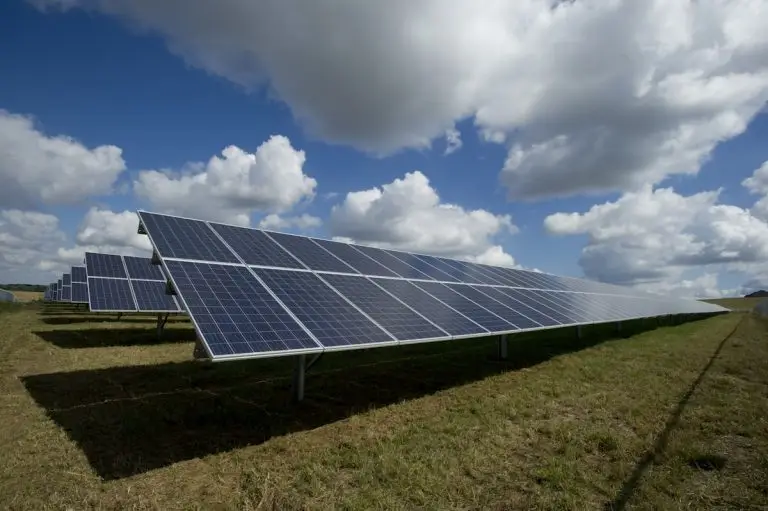
Boreholes remain the primary water source for commercial poultry operations in arid regions. Modern drilling reaches aquifers at 50–200 metres depth, and solar-powered submersible pumps eliminate the fuel costs and maintenance burden of diesel generators.
- Solar pumping systems: Deliver 5,000–20,000 litres per day depending on panel capacity and aquifer yield
- Operating cost: Near zero after installation — no fuel, minimal maintenance
- Reliability: Battery storage ensures pumping continues through cloudy periods and overnight
Rainwater Harvesting From Poultry House Roofs
Commercial poultry houses present a significant, underutilised catchment area. The mathematics are compelling:
- An 800 m² roof area (typical for a 10,000-bird house) captures approximately 400,000 litres annually in regions receiving 500 mm of rainfall
- Multiple houses multiply the catchment proportionally — three houses capture over 1.2 million litres
- First-flush diverters and filtration ensure harvested water meets poultry consumption standards
- Storage in lined earth dams or elevated tanks provides gravity-fed distribution
Even in semi-arid regions, rainwater harvesting supplements borehole supply during wet seasons, extending aquifer life and reducing pumping costs.
Elevated Storage for Gravity-Fed Distribution
Elevated tanks positioned above house height eliminate the need for pressure pumps in the distribution network. Gravity provides consistent, reliable pressure to drinker lines without electricity dependence — a critical advantage during power outages that can last hours or days in rural East African locations.
Water Recycling From Cooling Systems
Evaporative cooling pads, essential for maintaining bird comfort in high-temperature environments, consume significant water volumes. Modern recirculation systems recover 60–70% of cooling water for reuse, dramatically reducing total consumption. Blowdown water, rich in minerals but free of pathogens, can be diverted to irrigation rather than discharged.
County Water Board Partnerships
In Kenya, county governments manage water resources through county water boards. Commercial poultry operations can negotiate dedicated supply agreements, bulk tariff rates, and priority allocation during rationing periods. Establishing these partnerships during the planning phase — before construction begins — ensures water security is contractually guaranteed.
Water system design is one of the factors that determines whether an operation achieves the kind of return on investment that makes commercial poultry farming a compelling proposition. The difference between a farm that thrives in arid conditions and one that struggles is almost always traceable to water infrastructure decisions made before the first bird arrived.
Engineer Water Security Into Your Operation
Water scarcity is a solvable engineering problem, not a barrier to commercial poultry production. The combination of efficient closed drinker systems, multi-source supply strategies, and adequate storage transforms arid-region farming from high-risk to high-confidence.
Big Dutchman East Africa has spent 12 years designing and commissioning poultry production systems across East Africa’s most challenging environments. Our layer production and broiler housing solutions integrate water management as a core engineering discipline — not an afterthought.
Planning a poultry operation in an arid or semi-arid region? Contact our engineering team for a water system design consultation tailored to your location, flock size, and climate conditions.